Cart
0


The oval cut diamond is Australia's most popular alternative diamond shape, and its fastest-growing engagement ring choice.
Its elongated silhouette flatters the finger - it appears larger than a round diamond of the same carat, and it delivers brilliance very close to the classic round. All of that, in a shape that feels distinctly individual.
Here's everything you need to know.
What Is an Oval Cut Diamond?
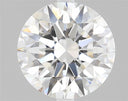
An oval shape diamond is an elongated, rounded diamond with smooth, curved edges and no sharp corners.
It was created in the late 1950s by Russian diamond cutter Lazare Kaplan, who adapted the round brilliant's precision faceting into an elongated form.
The result: a stone with outstanding brilliance and a silhouette that naturally flatters the hand.
What Is an Oval Brilliant Cut?
The oval brilliant cut is the technical name for a standard oval cut diamond.
"Brilliant" refers to the faceting arrangement, the same light-maximising pattern used in round brilliant diamonds, adapted to fit an elongated oval outline. It isn't a separate style of oval. It's the precise industry term for how oval diamonds are cut and graded.
How Many Facets Does an Oval Diamond Have?
Oval diamond facets typically number 56 to 58, depending on the cutter.
This is nearly identical to the round brilliant's 58 facets. Each facet is positioned to reflect light back through the top of the stone, producing fire and brilliance very close to a round diamond performance.
Explore our oval diamond collection →
Types of Oval Diamond Cuts - Shape Variations Explained

When people ask about different cuts of oval diamonds, they're usually referring to variations in proportions rather than different facet arrangements.
The main types of oval diamond cuts by proportion:
|
Type |
Length-to-Width Ratio |
Look |
|
Slim/elongated oval |
1.60 and above |
Very long and narrow; strong finger-elongating effect |
|
Classic oval |
1.35-1.50 |
Balanced, elegant - the most popular in Australia |
|
Wide/round oval |
1.20-1.35 |
Rounder appearance; closer to a circle |
|
East-west oval |
Any ratio, set horizontally |
Modern, architectural - a 2026 standout |
The classic 1.35–1.50 ratio is the most commonly requested oval cut diamond proportion at Rings of Australia.
Do Oval Diamonds Look Bigger?
Yes, oval diamonds genuinely do look bigger than other shapes at the same carat weight.
Here's why:
Oval shape diamonds have a larger face-up surface area than round diamonds of identical carat weight. More stone is visible from above, making the stone appear larger.
As a direct comparison:
-
A 1ct oval diamond measures roughly 8 × 5.5mm face-up
-
A 1ct round diamond measures roughly 6.4mm across
The elongated shape also creates a continuous visual line along the finger, making the stone read even more prominent on the hand.
For a direct size comparison against the round brilliant, see our round cut diamond guide.
What Does an Oval Engagement Ring Mean?
An oval engagement ring carries both visual and symbolic meaning.
Symbolically, the unbroken, continuous curve of an oval shape diamond is often associated with:
-
Eternity and continuity - no edges, no endpoints, no beginning or end
-
Individuality - a deliberate step away from the conventional round
-
Elegance - the elongated form has long been associated with grace and refinement
Choosing an oval cut diamond engagement ring signals something specific: beauty with a point of view. It's a shape that's considered rather than default, chosen rather than assumed.
H2: Oval Cut Diamonds Pros and Cons
Here's an honest breakdown before you decide.
Pros ✓
-
Appears larger per carat - shows more surface area face-up than round, princess, or cushion at equivalent weight
-
Finger-flattering - the elongated shape makes fingers appear longer and slimmer
-
Excellent brilliance - oval brilliant cut delivers fire and scintillation very close to round diamond performance
-
Less expensive than round - per-carat, for equivalent visual size and quality
-
Versatile - suits solitaire, halo, hidden halo, bezel, east-west, and pavé settings
-
No sharp corners - no vulnerability to chipping at pointed edges
Cons ✗
-
The bowtie effect - most oval diamonds show a dark shadow across the widest part of the stone. Minimal bowtie is acceptable; a strong bowtie significantly reduces brilliance. Always view in person or on video before purchasing.
-
No standardised cut grade - unlike round diamonds, IGI and GIA don't issue an official cut grade for ovals. Cut quality must be assessed visually by symmetry and bowtie severity.
-
Difficult to compare by specs alone - two ovals with identical 4Cs can look very different face-up. Viewing is essential.
-
Tips require proper setting - the two ends of an oval can be vulnerable without protective prongs. Setting quality matters.
How to Pick an Oval Diamond Ring

These are the four things that matter most when choosing an oval cut diamond ring.
1. Check the Bowtie First
View the diamond in multiple lighting conditions - natural light, overhead light, and dim light.
A minimal bowtie shadow is natural and acceptable. A strong bowtie that dominates the centre of the stone is a sign of poorly proportioned facets and should be avoided.
2. Look for Symmetry
A well-cut oval diamond should have even, matching curves on both sides.
View from directly above, both ends should be mirror images of each other with no lopsided bowing or uneven curves.
3. Choose Your Length-to-Width Ratio
|
Ratio |
Look |
|
1.35-1.50 |
Classic oval - the most universally flattering |
|
1.50-1.65 |
More elongated, visually dramatic |
|
Below 1.30 |
Wider, rounder - approaches a circle |
4. Apply the 4Cs
|
Factor |
Recommended Grade |
Why |
|
Cut |
Assess visually - no official grade for ovals |
Symmetry and bowtie are your cut indicators |
|
Clarity |
VS2 or higher |
Inclusions can hide in the bowtie zone |
|
Colour |
G-H |
Near-colourless; yellow gold settings allow I-J |
|
Carat |
Your preference - ovals appear large per carat |
Strong value vs round at equivalent visual size |
Browse oval diamond engagement rings →
Modern Oval Cut Diamond Ring Styles in 2026
The modern oval cut diamond is at the centre of Australia's most-requested engagement ring designs this year.
East-West Oval: The diamond sits horizontally across the finger rather than vertically. Architectural, unconventional, and one of 2026's most sought-after configurations for oval cut diamonds.
Hidden Halo with Oval Centre Accent diamonds are set beneath the profile of the oval, creating a subtle glow from below. Clean silhouette from the front, complex brilliance from the side.
Oval Solitaire in 18K Yellow Gold: The warm tone of yellow gold enhances the oval's brilliance. This combination is the most requested setting for oval cut diamonds in Australia across all styles this year.
Toi et Moi - Oval + Pear Two stones on a shared band. The oval diamond paired with a pear-cut stone is one of 2026's defining engagement ring designs, personal, distinctive, and deeply symbolic.
Discover lab-grown oval diamond rings →
Oval Diamond Jewellery

Engagement Rings
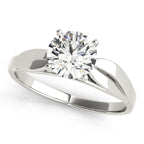
Oval cut diamonds are Australia's most popular alternative engagement ring shape.
They suit every setting, solitaire, halo, bezel, pavé, three-stone, and complement every hand shape. Browse oval engagement rings →
Earrings
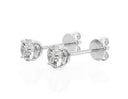
Oval diamonds in stud or drop settings create an elongated, clean look.
The shape catches light across its full surface and sits elegantly close to the face. Shop oval diamond earrings →
Pendants
A single oval shape diamond pendant draws the eye in a flattering downward line.
Versatile from casual to formal, one of the most wearable pendant shapes available. View oval diamond pendants →
Frequently Asked Questions
What is an oval brilliant cut diamond?
The oval brilliant cut is the technical name for a standard oval cut diamond.
It has the same light-maximising facet arrangement as a round brilliant, 56 to 58 facets adapted into an elongated oval outline. "Brilliant" describes the faceting pattern, not a special variation of the shape.
Do oval diamonds look bigger than other shapes?
Yes. Oval cut diamonds have a larger face-up surface area than round, princess, and cushion diamonds of the same carat weight.
A 1ct oval diamond typically appears 10-15% larger from above than a 1ct round. The elongated shape also creates a visual line along the finger, increasing the perception of size further.
What does an oval engagement ring mean?
An oval engagement ring is associated with eternity, continuity, and individuality.
The unbroken curve has no sharp edges or endpoints, symbolising a love without limits. Choosing an oval cut diamond also signals a considered personal style: elegant, distinctive, and not simply conventional.
What are the different types of oval cut diamonds?
Oval cut diamonds vary primarily by length-to-width ratio, slim and elongated (1.60+), classic balanced (1.35-1.50), wide and round (1.20-1.35), or east-west set at any proportion for a horizontal, modern look.
The classic 1.35-1.50 proportion is the most widely chosen in Australia.
What is the bowtie effect?
The bowtie effect is a dark shadow across the widest section of an oval diamond, caused by how the elongated facets reflect light.
Some bowties are natural and expected. A minimal shadow is acceptable - it's part of how oval brilliants interact with light. A strong, dominant bowtie indicates poorly cut proportions and should be avoided.
Are oval diamonds more expensive than round?
No, oval cut diamonds are typically less expensive per carat than round brilliants at equivalent quality.
Round diamonds carry a higher global demand and waste more rough stone during cutting. An oval-shaped diamond generally gives you more visible stone for the same spend.
How do you pick an oval diamond ring?
Focus on four things: a minimal bowtie in multiple lighting conditions, an even and symmetrical curved outline, a length-to-width ratio between 1.35 and 1.50 for a classic proportion, and G-H colour with VS2 clarity for excellent value.