Cart
0


The round brilliant cut diamond is the most popular diamond shape in the world, and the most precisely engineered.
No other shape captures and reflects light with quite the same consistency. Whether you're choosing an engagement ring, a pendant, or earrings, round cut diamond jewellery sets the standard for brilliance across every category.
Here's everything you need to know.
What Is a Round Brilliant Cut Diamond?
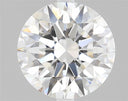
A round brilliant cut is a circular diamond cut with 58 precisely arranged facets.
Each facet is positioned to maximise internal light reflection, producing the fire, brilliance, and scintillation the cut is known for.
What Are Round Diamonds Called?
Round diamonds are formally known as round brilliant cut diamonds or round brilliant diamonds.
The word "brilliant" refers to the specific faceting arrangement, not just the shape. A diamond can be round in outline without being brilliant-cut, but today's modern round cut diamonds are almost exclusively brilliant-cut.
You'll also see the terms round shape diamond and round diamond used interchangeably in everyday jewellery shopping - they all refer to the same stone.
Why Round Brilliant Diamonds Shine the Brightest

The round brilliant cut was mathematically engineered for maximum light performance. The results are measurable.
Here's what sets it apart from every other shape:
-
58 precisely angled facets - each one designed to reflect and refract light back through the top of the stone
-
Perfect symmetry - light entering from any direction reflects evenly across all facets
-
Optimised proportions - table and crown angles developed by Marcel Tolkowsky in 1919 remain the global benchmark
-
Cut grading available - only round brilliant diamonds receive an Excellent or Ideal cut grade from GIA and IGI, the two most trusted certification labs
-
No bow-tie effect - unlike elongated shapes, round diamonds show no dark shadow across the stone
A round brilliant cut diamond graded Excellent or Ideal cut will outperform any other shape of the same carat weight for pure sparkle.
A Brief History of the Round Brilliant Cut
Round cut diamonds have existed since the early 1700s.
But the modern version, the cut that defines the shape today, was created in 1919 by Marcel Tolkowsky. He applied geometry and light physics to calculate the exact proportions that maximise brilliance.
That formula became the global industry standard and has remained largely unchanged for over a century.
How to Choose a Round Cut Diamond - The 4Cs
When selecting a round cut diamond, these four factors determine quality and value.
Cut - Prioritise This Above Everything Else
For round brilliant cut diamonds, cut is the single most important quality factor.
Aim for:
-
Excellent (GIA) or Ideal (IGI) cut grade
-
Table percentage: 54-60%
-
Depth percentage: 59-62.5%
A well-cut round diamond will outshine a larger, poorly cut stone every time.
Clarity
Round brilliant diamonds hide inclusions better than most other shapes.
You can often choose a lower clarity grade, SI1 or SI2, without visible inclusions to the naked eye. This is one of the practical cost advantages of a round diamond.
Recommended for value: VS2 or SI1
Colour
Near-colourless grades work beautifully in a round brilliant cut diamond without requiring top-tier colour spend.
|
Grade |
What It Means |
Best For |
|
D-F |
Colourless |
Maximum precision, higher cost |
|
G-H |
Near colourless |
Visually white, excellent value |
|
I-J |
Faint warmth |
Budget-conscious buyers, yellow gold settings |
Carat
A round shape diamond faces up slightly smaller than elongated shapes like oval or pear at the same carat weight.
That said, its brilliant-cut light return creates exceptional visual presence. A well-cut 1ct round brilliant will look striking in any setting.
Best Settings for Round Cut Diamond Jewellery
The symmetry of a round diamond makes it the most setting-versatile shape available. It works across every style:
|
Setting |
Why It Works |
|
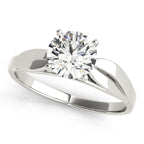
Solitaire |
The round diamond is the entire focus - nothing competes |
|
Halo |
Accent diamonds frame the stone, making it appear larger |
|
Pavé band |
Band sparkle complements the round centre's uniform brilliance |
|
Bezel |
Clean, modern enclosure; excellent for active lifestyles |
|
Three stone |
Round centre flanked by side stones adds symbolic depth |
|
Hidden halo |
Extra sparkle beneath the stone, subtle but striking |
Round Cut Diamond Jewellery - Every Category

A round brilliant diamond works beautifully across every jewellery type.
Engagement Rings
Round cut diamonds are the most chosen engagement ring centre stone worldwide.
They pair with every setting style, from a classic solitaire in yellow gold to an elaborate halo in platinum, and suit every hand shape and lifestyle.
Explore round diamond engagement rings →
Diamond Earrings
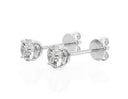
Classic round diamond studs never date.
The symmetrical shape means the stone sits evenly in the ear and catches light from every angle throughout the day.
Diamond Pendants
A single round cut diamond pendant creates effortless, understated elegance.
It moves between casual and formal without effort, the most versatile piece of round cut diamond jewellery you can own.
Round Cut vs. Oval Cut Diamond - Key Differences
|
Feature |
Round Brilliant Cut |
Oval Cut |
|
Brilliance |
Highest of all shapes |
Excellent - close to round |
|
Face-up size |
Appears true to carat weight |
Appears larger per carat |
|
Finger appearance |
Symmetrical, classic |
Elongates the finger |
|
Sparkle pattern |
Even, uniform across the stone |
Slight bow-tie shadow possible |
|
Global popularity |
#1 worldwide |
#2 and growing |
|
Setting versatility |
Works with every style |
Best in solitaire and halo |
Why Are Round Cut Diamonds More Expensive?
Round cut diamonds consistently cost more than other shapes at the same carat weight.
Three specific reasons explain the premium:
1. More rough diamonds are lost in cutting. Creating a circular shape removes significantly more of the original rough stone than elongated shapes. More waste per stone means a higher cost per finished carat.
2. Demand drives the price. Round brilliant diamonds account for over 70% of all diamond sales globally. That sustained demand keeps prices elevated, and supply and demand are at work.
3. Precision cutting takes exceptional skill. Achieving an Excellent or Ideal cut grade in a round brilliant requires extraordinary precision. Master cutters spend more time per stone, and that craftsmanship is built into the price.
The lab-grown option: A lab-grown round brilliant cut diamond delivers identical optical properties, same 58 facets, same cut grades, same IGI or GIA certification, at up to 70% lower cost than a mined stone.
Browse lab-grown round cut diamonds →
Frequently Asked Questions
What are round diamonds called?
Round diamonds are formally called round brilliant cut diamonds or round brilliant diamonds.
"Brilliant" refers to the specific 58-facet arrangement engineered for maximum light return, not just the circular shape. The terms "round cut diamond," "round shape diamond," and "round diamond" are all common everyday references to the same stone.
Why are round cut diamonds more expensive?
Three factors drive the price premium for round brilliant diamonds:
-
More rough stone is wasted during cutting compared to elongated shapes
-
Higher global demand - 70%+ of all diamonds sold are round brilliants
-
Greater cutting precision required to achieve Excellent or Ideal cut grades
A lab-grown round brilliant cut delivers the same result at significantly lower cost, worth considering if the round shape is your priority.
Are round cut diamonds better than oval diamonds?
Neither is objectively better - they suit different preferences.
Round brilliant diamonds offer the highest brilliance and a symmetrical, classic look. Oval diamonds appear larger per carat and visually elongate the finger. Both are excellent for engagement rings - the right choice depends on the wearer's style.
What is the ideal ratio for a round diamond?
A round cut diamond should have a length-to-width ratio of 1.00, a true circle.
For optimal light performance, aim for: table percentage 54-60% and depth percentage 59-62.5%.
Do round diamonds look bigger or smaller than other shapes?
Round shape diamonds face up slightly smaller than elongated shapes like oval or pear at the same carat weight.
However, the brilliant cut's light return creates exceptional visual presence. A well-cut round diamond often looks more impressive than a larger but poorly cut stone of any other shape.