Cart
0


A ring is one of the most meaningful objects in a relationship, but not all rings carry the same meaning. A promise ring, an engagement ring, and a wedding ring each mark a different chapter in a couple's story, and understanding the difference between them helps you choose the right one for where you are right now.
Whether you're asking what a promise ring is, what an engagement ring is, or trying to understand how all three fit together across a relationship's full journey, this guide covers every ring, every question, and every distinction that matters, clearly and without confusion.
All Three Rings at a Glance
|
Promise Ring |
Engagement Ring |
Wedding Ring |
|
|
When given |
Any point in a relationship |
At the proposal |
At the wedding ceremony |
|
What it means |
Commitment, fidelity, or future intention |
Formal promise to marry |
The legal and emotional bond of marriage |
|
Typical design |
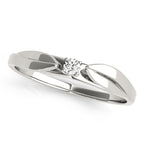
Simple band or small stone, no fixed style |
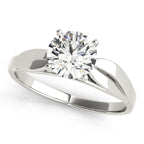
Prominent centre stone, ornate setting |
Plain band or subtle diamond detail |
|
Who wears it |
One or both partners |
The person who accepts the proposal |
Both partners |
|
Finger |
Right hand - no fixed tradition |
Left-hand ring finger |
Left-hand ring finger, closest to the hand |
|
Required? |
No, entirely optional and personal |
Traditional but not legally required |
Exchanged at most weddings |
What Is a Promise Ring?

A promise ring is a ring given between romantic partners to signify commitment, fidelity, or a deeply held intention, without the formality of a marriage proposal. It's one of the most personal and flexible gestures in a relationship because, unlike an engagement or wedding ring, it carries no single fixed tradition. The promise it represents is entirely defined by the couple giving and receiving it.
It might mean "I'm committed to you exclusively," "I intend to marry you when the time is right," or simply "you matter to me in a lasting way." Equally, it might be exchanged during a long-distance period, before one or both partners are ready for engagement, or simply as a meaningful gift between two people who want to mark the seriousness of their relationship without a proposal.
Different Types of Promise Rings
Because promise rings follow no established design tradition, the different types of promise rings are as varied as the couples who exchange them:
-
Solitaire promise rings - a single small stone (diamond, birthstone, or coloured gemstone) in a delicate setting. The most commonly given style is deliberately understated compared to an engagement ring.
-
Claddagh rings - an Irish tradition showing two hands holding a crowned heart, widely worn in Australia as a commitment or promise ring. When worn on the right hand with the heart pointing outward, it signals an open heart; pointing inward, a committed relationship.
-
Infinity or knot rings - bands incorporating the infinity symbol or an interlocking knot, symbolising an unbreakable bond
-
Matching couples rings - a complementary pair of bands worn by both partners, the most visible way for both people in a relationship to signal their commitment
-
Birthstone rings - incorporating one or both partners' birthstones for a distinctly personal touch
-
Engraved bands - plain metal bands with a meaningful date, initials, or phrase inscribed inside
There is no single correct type. The right promise ring is whichever one feels meaningful to the person who'll wear it.
What Does a Promise Ring Look Like?
A promise ring is intentionally more understated than an engagement ring. It typically features a smaller stone or no stone at all, a simpler setting, and a slimmer band profile. This visual modesty is deliberate - a promise ring is not meant to be mistaken for an engagement ring. It signals a meaningful commitment without making a formal declaration of a marriage proposal.
What Is an Engagement Ring?

An engagement ring is the ring presented at a marriage proposal. It signifies a formal intention to marry and marks the beginning of the engagement, the period between the proposal and the wedding ceremony. In Australia and around the world, an engagement ring is a cherished symbol of the exact moment a couple commits to a shared future.
Key characteristics:
-
Presented at or immediately after the proposal, sometimes a surprise, often chosen together in 2026
-
Features a prominent centre stone, most commonly a diamond or lab-grown diamond
-
Designed to be noticed, more ornate and elevated than a promise ring or wedding band
-
Worn on the fourth finger of the left hand
Modern engagement ring design spans an extraordinary range: classic solitaires, halo settings, pavé bands, vintage-inspired milgrain styles, Toi et Moi two-stone designs, and coloured gemstone centres are all legitimate and popular choices in Australia. Tradition requires only the intent - everything else is personal.
H3: What Is a Proposal Ring?
In Australia, "proposal ring" and "engagement ring" are used interchangeably - both describe the ring given at the moment of proposing marriage. The term "proposal ring" simply emphasises the moment of giving. Some couples use a placeholder ring at the proposal (when they plan to choose the true ring together afterwards) - this stand-in is also called a proposal ring. In either case, the ring worn through the engagement is the engagement ring, regardless of when it was selected.
What Is a Wedding Ring?

A wedding ring, also called a wedding band, is the ring exchanged between partners during the wedding ceremony itself. It represents the formal commitment of marriage: the vow made publicly and legally at the altar. Unlike an engagement ring, wedding rings are traditionally worn by both partners from the wedding day onwards.
Key characteristics:
-
Exchanged at the wedding ceremony, not before
-
Typically simpler and lower-profile than an engagement ring
-
Sits closest to the palm, beneath the engagement ring, on the left ring finger
-
Worn by both partners, traditionally for life
Types of Wedding Rings and Their Meaning
The types of wedding rings available in Australia carry distinct meanings, and the choice of style often reflects something personal about the couple:
|
Wedding Ring Type |
Description |
What It Conveys |
|
Plain metal band |
Polished or brushed gold or platinum, no stones |
Simplicity, permanence, pure commitment |
|
Diamond-set band |
Accent diamonds set into the shank |
Added brilliance alongside the engagement ring |
|
Eternity ring |
Diamonds are set continuously around the full band |
Eternal, unending love, no beginning, no end |
|
Half-eternity band |
Diamonds across the front half only |
Practical variation: easier to resize and more comfortable for daily wear |
|
Contoured/fitted band |
Shaped to follow the curves of the engagement ring |
Visual unity, the two rings read as one piece on the hand |
|
Milgrain or vintage band |
Heritage-style beaded edging and intricate detail |
Warmth, character, and artisan craftsmanship |
Many couples choose to have their wedding bands customised to complement their engagement ring, matching metals, echoing a design detail, or including meaningful engravings inside the band.
Engagement Ring or Wedding Band - What's the Difference?
An engagement ring or wedding band is one of the most-searched comparisons among Australian couples. The short answer: they're two separate pieces given at different moments in a relationship.
-
The engagement ring is given at the proposal, before the wedding, and typically features a prominent centre stone
-
The wedding band is exchanged at the ceremony and sits closest to the hand, beneath the engagement ring
After the wedding, both rings are worn together on the left ring finger for life. For a full breakdown, our complete engagement ring vs wedding ring guide covers the differences in design, cost, and timing.
Types of Rings in a Relationship - The Full Journey

Understanding the types of rings in a relationship - and when each one typically appears - helps clarify how a couple's ring story unfolds from the beginning through to the ceremony.
Most Australian couples follow one of two paths:
Complete ring journey: Promise ring → Engagement ring → Wedding ring
Most common path: Engagement ring → Wedding ring (no promise ring)
Neither is more meaningful than the other. The promise ring is optional and personal - many deeply committed relationships and long, loving marriages never include one.
What Comes After a Promise Ring?
What comes after a promise ring depends entirely on the couple and where their relationship is heading. If the relationship progresses towards marriage, the natural next step is an engagement ring given at a formal proposal. At that point, the promise ring is typically moved to the right hand, to a different finger, or stored safely, so the left-hand ring finger is ready for the engagement ring.
Some couples skip the engagement ring entirely and move from a promise ring directly to exchanging wedding bands at the ceremony. This is less common but entirely valid.
Promise Ring to Engagement Ring - How the Transition Works
The promise ring to engagement ring transition is one of the most thoughtful moments in a couple's jewellery journey. There's no fixed protocol - each couple handles it in the way that feels right for them:
-
Move the promise ring to the right hand permanently, wearing both rings simultaneously
-
Retire the promise ring and keep it as a sentimental keepsake from that stage of the relationship
-
Incorporate the promise ring's stone into the new engagement ring as a custom design, a particularly meaningful way to honour the full story
-
Continue wearing both on different hands without any formal change
At Rings of Australia, our complimentary custom design service has helped couples incorporate stones from promise rings into new engagement ring settings, turning two chapters of a relationship into one wearable piece.
Proposal Ring vs Engagement Ring vs Wedding Ring - Direct Comparison
|
Promise / Pre-Engagement Ring |
Engagement / Proposal Ring |
Wedding Ring / Band |
|
|
Given at |
Any stage of the relationship |
Formal marriage proposal |
Wedding ceremony |
|
Symbolises |
Commitment, fidelity, future intention |
Formal promise to marry |
The marriage itself |
|
Design |
Simple, understated, small or no stone left unturned |
Prominent centre stone, elevated setting |
Plain band or subtle diamond detail |
|
Worn by |
Either or both partners |
The person who accepts the proposal |
Both partners |
|
Position in the journey |
First - optional |
Second - given at the proposal |
Last - given at the ceremony |
|
Sits beneath/above |
Usually, the right hand |
Above the wedding band |
Closest to the hand |