Cart
0


Diamond Jewellery Guide
Diamond jewellery marks life's most meaningful chapters. An anniversary is celebrated with diamond earrings. A milestone birthday remembered through a pendant. A marriage commitment worn daily in a wedding band. These pieces become part of your personal story, passed down, treasured, and admired across generations.
But with so many options available to Australian buyers, styles, settings, metals, and quality tiers, how do you choose confidently? What separates a piece that delights for decades from one that disappoints within months?
This guide covers everything you need to know about selecting diamond earrings, pendants, bracelets, and women's wedding bands, helping you invest wisely in pieces that genuinely last.

Evaluating Diamond Jewellery Quality
Before exploring individual jewellery types, understanding quality fundamentals ensures every purchase decision is sound.
Diamond Quality in Jewellery
The 4Cs apply to jewellery diamonds just as they do to engagement ring centre stones, with some practical adjustments based on stone size.
Cut: Always prioritise excellent cut. Sparkle is what draws attention to jewellery; a poor cut undermines the entire piece regardless of other qualities.
Colour: For smaller accent diamonds (under 0.30ct), G-I colour appears white and offers excellent value. For larger focal stones, stay in the G-H range.
Clarity: Small diamonds are naturally forgiving - SI1-SI2 is typically eye-clean at these sizes. For larger feature stones, VS2 or better ensures a consistently clean appearance.
Total Carat Weight (TCW): Jewellery listings use TCW, the combined weight of all diamonds in the piece. Always understand what proportion sits in the feature stone versus the accent stones.
Australian Climate Considerations
Australia's warm climate and outdoor lifestyle create specific jewellery considerations:
• Saltwater and chlorine: Remove jewellery before swimming at the beach or in pools—both can damage metals and loosen settings over time
• Sunscreen and cosmetics: Apply before putting on jewellery; chemicals can dull surfaces and affect metal finishes
• Heat: Prolonged exposure to intense heat (common in Queensland summers) can affect certain metal finishes; store jewellery away from direct sunlight
Metal Quality and Selection
| Metal | Characteristics | Best For | Considerations |
|---|---|---|---|
| Platinum | Naturally white; most durable; hypoallergenic | Investment pieces; sensitive skin | Highest cost |
| 18K White Gold | Bright white (rhodium-plated); excellent durability | Most fine jewellery | May need replating every 2-3 years |
| 14K White Gold | White (plated); more durable than 18K | Everyday wear pieces | More affordable |
| 18K Yellow Gold | Rich warm tone; classic | Traditional and vintage styles | Shows scratches less than white metals |
| 14K Yellow Gold | Classic gold; excellent durability | Everyday wear | Most popular across Australia |
| Rose Gold | Warm pink hue; universally flattering | Contemporary and romantic styles | Copper content adds strength |
Diamond Earrings: Styles, Settings, and Sizing
Earring Backs and Security
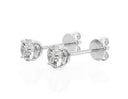
Screw backs: Most secure option; recommended for higher-value studs; essential for children's earrings
Push backs: Standard and convenient; suitable for most everyday styles
Lever backs: Secure hinged closure ideal for drop and dangle styles
La Pousette backs: Premium friction backs combining security with easy removal

Popular Diamond Earring Styles
Diamond Studs: The foundational piece of any jewellery collection. Classic, timeless, and genuinely appropriate for every occasion, from beach brunches to black-tie galas.
• Best for: Everyday wear, professional environments, versatile gifting
• Popular sizes: 0.30 TCW to 2.00 TCW
• Setting options: 4-prong (maximum sparkle), bezel (sleek and secure), martini (sits close to the ear)
Halo Earrings: A centre diamond surrounded by a ring of smaller accent stones, creating significantly greater visual impact than the carat weight alone suggests.
• Best for: Maximum presence with budget efficiency
• Popular sizes: 0.75 TCW to 1.50 TCW
• Advantage: Appears 20-30% larger than equivalent solitaire studs
More Significant Inclusion Types
Drop Earrings: Drop earrings with diamonds suspended below the earlobe, adding movement and elegance, are particularly suited to formal Australian occasions.
• Best for: Weddings, formal events, milestone celebrations
• Styles: Classic drops, linear drops, chandelier designs
• Length range: Subtle (2cm) to statement (6cm+)
Huggie Hoops: Small hoop earrings that "hug" the earlobe, set with diamonds for continuous sparkle.
• Best for: Versatile day-to-evening wear; Australian casual-chic aesthetic
• Advantage: Comfortable for all-day wear; secure fitting
• Popular diameter: 12-18mm
Diamond Hoops: Larger circular earrings set with diamonds along the front face or completely around.
• Best for: Statement occasions; those who prefer hoop silhouettes
• Styles: Front-facing, inside-out (diamonds visible from both sides)
Selecting the Right Earring Size
| Total Carat Weight | Approximate Stud Diameter | Visual Impact |
|---|---|---|
| 0.25 TCW | 3.2mm each | Delicate, subtle |
| 0.50 TCW | 4.0mm each | Classic everyday size |
| 0.75 TCW | 4.5mm each | Noticeable elegance |
| 1.00 TCW | 5.2mm each | Popular gift size |
| 1.50 TCW | 5.9mm each | Statement presence |
| 2.00 TCW | 6.4mm each | Bold, impressive |
Diamond Pendants: Finding Your Perfect Necklace
A diamond pendant draws attention to the neckline and adds a focal point of elegance to any outfit. From the simplest solitaire to more elaborate designs, there's a pendant suited to every Australian woman's style.
Popular Diamond Pendant Styles
Solitaire Pendants: A single diamond suspended simply, the most classic and enduringly popular pendant choice.
• Best for: Everyday elegance, layering with other necklaces, timeless appeal
• Popular sizes: 0.25ct to 1.00ct
• Setting options: 4-prong, bezel, basket, tension
Halo Pendants: A centre diamond encircled by smaller accent stones for amplified sparkle and perceived size.
• Best for: Special occasions, those who prefer maximum impact
• Advantage: Appears significantly larger than actual carat weight
• Popular sizes: 0.50ct centre and upward
Journey Pendants: Diamonds arranged in a graduated line, representing life's journey and personal growth.
• Best for: Milestone celebrations, meaningful gifts for achievements
• Arrangement: Diamonds increase in size from one end, symbolising progression
Cluster Pendants: Multiple diamonds grouped together to create a floral, geometric, or abstract design.
• Best for: Those who prefer decorative designs over single-stone simplicity
• Advantage: Achieves large visual impact at accessible price points
Floating Diamond Pendants: A diamond seemingly suspended in air using a tension or illusion setting, minimal metal, maximum focus on the stone.
• Best for: Contemporary minimalist tastes
• Modern appeal: Clean, architectural appearance
Chain Length Guide for Australian Women
| Chain Length | Placement | Best Necklines |
|---|---|---|
| 40cm (16") | At the collarbone | Higher necklines; delicate look |
| 45cm (18") | Just below the collarbone | Most popular; works universally |
| 50cm (20") | Above the bust | Scoop and V-necklines |
| 55cm (22") | At the bust | Deeper necklines; layering |
| 60cm (24"+) | Below the bust | Statement length; layering |
Australian sizing note: Chain lengths are commonly listed in both centimetres and inches across Australian retailers. Confirm which unit is being used before purchasing online.
Chain Style Considerations
Cable chain: Classic linked construction; durable and versatile
Box chain: Square links; contemporary and strong; suits geometric pendants
Rope chain: Twisted design; catches light beautifully; elegant appearance
Trace chain: Delicate flat links; suits minimalist pendants
Diamond Bracelets: From Tennis Bracelets to Bangles
A diamond bracelet adds sophisticated sparkle to the wrist, visible in every gesture and catching light throughout the day. Whether worn alone or stacked with other pieces, diamond bracelets make enduring style statements.
Diamond Quality Guidance
Cut: Excellent or Very Good, sparkle is paramount in tennis bracelets
Colour: G-H for consistent white appearance; I-J acceptable for yellow gold settings
Clarity: SI1-SI2 is appropriate - small diamonds are naturally eye-clean
Clasp security: For valuable tennis bracelets worn in active Australian lifestyles, including beach days and outdoor events, choose bracelets with secondary safety catches that prevent accidental opening. A hidden safety clasp provides the most security without affecting appearance.

Popular Diamond Bracelet Styles
Tennis Bracelets: A continuous line of individually set diamonds encircling the wrist. The name originates from tennis champion Chris Evert, who stopped a match at the 1987 US Open to retrieve hers after the clasp broke, and the style has carried her name ever since.
• Best for: Elegant everyday wear, formal occasions, milestone gifts
• Popular TCW: 3.00 to 8.00 carats
• Setting options: 4-prong (maximum sparkle), bezel (secure and modern), shared prong (continuous sparkle effect)
Bangle Bracelets: Rigid circular bracelets, either solid or set with diamonds across part or all of the surface.
• Best for: Stacking combinations, structured styling, bold statements
• Styles: Full diamond bangle, half-set bangle, diamond-accented bangle
• Advantage: No clasp to worry about; adjustable by selecting the appropriate internal diameter
Diamond Cuff Bracelets: Open-ended rigid bracelets with diamonds set into the design, a contemporary alternative to closed bangles.
• Best for: Modern styling, those who prefer an adjustable fit
• Styles: Wide statement cuffs, slim accent cuffs
Station Bracelets: Delicate chain bracelets featuring diamond stations at regular intervals.
• Best for: Everyday wear, layering, subtle sparkle
• Advantage: Lightweight and comfortable; suits active Australian lifestyles
Bar Bracelets: A horizontal diamond bar connected by delicate chain segments, a modern, architectural design.
• Best for: Minimalist and contemporary tastes
• Styling: Works beautifully alone or stacked
Tennis Bracelet Buying Guide for Australians
Tennis bracelets represent significant purchases deserving careful consideration:
Carat Weight Selection
| TCW | Visual Presence | Suitable For |
|---|---|---|
| 2.00-3.00ct | Delicate, refined | Petite wrists; everyday elegance |
| 4.00-5.00ct | Balanced, noticeable | Most wrist sizes; versatile wear |
| 6.00-8.00ct | Statement, impressive | Larger wrists; formal occasions |
| 10.00ct+ | Show-stopping | Maximum impact occasions |

Women's Wedding Bands: Completing Your Bridal Set
Your wedding band is the one piece of jewellery you'll wear every single day, through beach holidays, backyard barbecues, work presentations, and quiet evenings at home. Selecting one that complements your engagement ring while suiting your lifestyle is genuinely important.
Popular Wedding Band Styles
Eternity Bands: Diamonds are set completely around the band, representing unending love and commitment.
• Best for: Maximum sparkle; romantic symbolism
• Important note: Cannot be resized after setting; precise sizing is essential before purchase
• Variations: Full eternity (all around) or half eternity (front half only)
Half Eternity Bands: Diamonds cover the front-facing half of the band, visible when worn, plain on the underside.
• Best for: Practicality combined with elegance; budget efficiency
• Advantage: Can be resized if needed; more comfortable for some wearers
• Popular choice: Delivers beautiful sparkle where it's visible while remaining practical
Pavé Bands: Tiny diamonds set closely together across the band surface, creating a continuous shimmer effect.
• Best for: Delicate, feminine appearance; complements most engagement ring styles
• Styles: Micro-pavé (very fine), standard pavé, French-cut pavé
Channel Set Bands: Diamonds secured between two parallel metal walls for a contemporary, protected setting.
• Best for: Active Australian lifestyles; secure setting; smooth surface
• Advantage: Diamonds are fully protected; no prongs to catch on clothing or wetsuits
Contour and Curved Bands: Shaped specifically to nestle against engagement rings with larger or unusually shaped centre stones.
• Best for: Engagement rings where a straight band would create gaps
• Custom option: Can be made to match your specific ring profile precisely
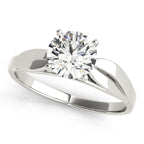
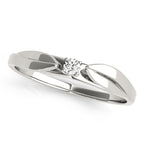
Plain Bands With Diamond Details: Classic metal bands featuring subtle diamond accents, a hidden stone inside, a single diamond at the join, or scattered small stones.
• Best for: Understated elegance; minimalist preferences; those who prefer unencumbered metal bands
Matching Your Engagement Ring
Metal consistency: Match your wedding band metal to your engagement ring wherever possible. Mixing metals requires intentional styling to avoid appearing mismatched.
Width Proportions
• Delicate engagement ring band → Wedding band 1.5-2.0mm width
• Medium engagement ring band → Wedding band 2.0-2.5mm width
• Substantial engagement ring band → Wedding band 2.5-3.0mm width
Profile Compatibility
• High-set engagement ring → Most wedding bands will sit flush underneath
• Low-set engagement ring → Confirm clearance before purchasing
• Shaped centre stone → Consider a contour band for a flush fit
Style Harmony for Australian Tastes
| Engagement Ring Style | Complementary Wedding Band |
|---|---|
| Classic solitaire | Almost any style; great versatility |
| Halo ring | Delicate pavé or plain band |
| Vintage-inspired | Milgrain edge or vintage-detail band |
| Contemporary geometric | Channel set or plain contemporary band |
| Nature-inspired | Organic textured or pavé band |
Caring for Your Diamond Jewellery in Australia
Australia's climate and lifestyle create specific jewellery care needs.
Regular Home Cleaning
Weekly Maintenance
• Mix warm water with a few drops of mild dishwashing liquid
• Soak pieces for 15-20 minutes
• Gently brush with a soft toothbrush, particularly behind diamonds, where soap residue accumulates
• Rinse thoroughly under warm running water
• Pat dry with a lint-free cloth
Australian Lifestyle Precautions
• Before swimming: Remove all jewellery, both saltwater and pool chlorine degrade metal finishes and can loosen settings over time
• Before applying sunscreen: A particular Australian necessity, allow sunscreen to absorb fully before putting on jewellery
• Before gardening: Soil and physical impact can damage settings and scratch metal surfaces
• During sport: Remove before any physical activity that risks impact or snagging
Professional Care Schedule
| Timing | Service |
|---|---|
| Every 6 months | Professional inspection, prong check, ultrasonic cleaning |
| Annually | Steam cleaning, setting assessment, and metal polishing |
| As needed | Prong retipping; rhodium replating for white gold; stone replacement |
Frequently Asked Questions
What carat size is best for diamond stud earrings in Australia?
For everyday Australian wear, 0.50-1.00 TCW suits most styles and occasions comfortably. This size range is noticeable without being overpowering, and transitions naturally between casual and professional settings. For special occasions or those who prefer bolder styling, 1.50-2.00 TCW makes a beautiful statement.
Are lab grown diamonds suitable for fine jewellery?
Absolutely. Lab grown diamonds are chemically and optically identical to mined diamonds, same sparkle, same durability, same beauty. They offer significant cost savings, meaning you can access larger or higher-quality stones for an equivalent budget. Many Australians choose lab grown diamonds for jewellery specifically to maximise visual impact.
How do I choose between white gold and platinum for Australian conditions?
Both perform well in Australian conditions. Platinum is more durable and maintains its white colour naturally without replating, beneficial for active lifestyles. White gold costs less but requires periodic rhodium replating to maintain brightness. For pieces worn daily in active environments, platinum's durability often justifies the premium.
Can I wear my tennis bracelet to the beach?
We recommend removing it before entering the water. Saltwater can affect metal finishes over time, and wave movement creates a risk of loss if a clasp opens unexpectedly. For beach days, consider leaving fine jewellery at home or secured safely.
Should my wedding band match my engagement ring exactly?
They don't need to match exactly, but should complement each other harmoniously. The same metal type is strongly recommended. Consider whether they'll be worn together daily or separately for different occasions - this affects how closely you need them to coordinate.
How much should I spend on diamond jewellery in Australia?
There's no universal answer - spend what feels comfortable for the significance of the occasion and your financial situation. Quality matters more than price: a well-cut, beautifully set smaller diamond will always look better than a larger stone with poor craftsmanship. Focus on quality first, then size within your comfortable budget.
What's the most universally appreciated diamond jewellery gift?
Diamond stud earrings suit virtually every style, age, and occasion, making them the most reliably appreciated gift. For romantic occasions, a solitaire pendant carries a beautiful sentiment. Tennis bracelets make extraordinary milestone gifts for significant anniversaries or achievements. When uncertain about preferences, classic styles in timeless designs are always a safe and beautiful choice.
Discover Your Perfect Piece
Whether you're selecting diamond earrings for everyday elegance, a pendant to mark a meaningful moment, a bracelet that catches every light, or a wedding band to wear through life's greatest adventure, we're here to help you find it. Our Brisbane-based team understands Australian lifestyles and helps you find pieces that look beautiful and last genuinely well.